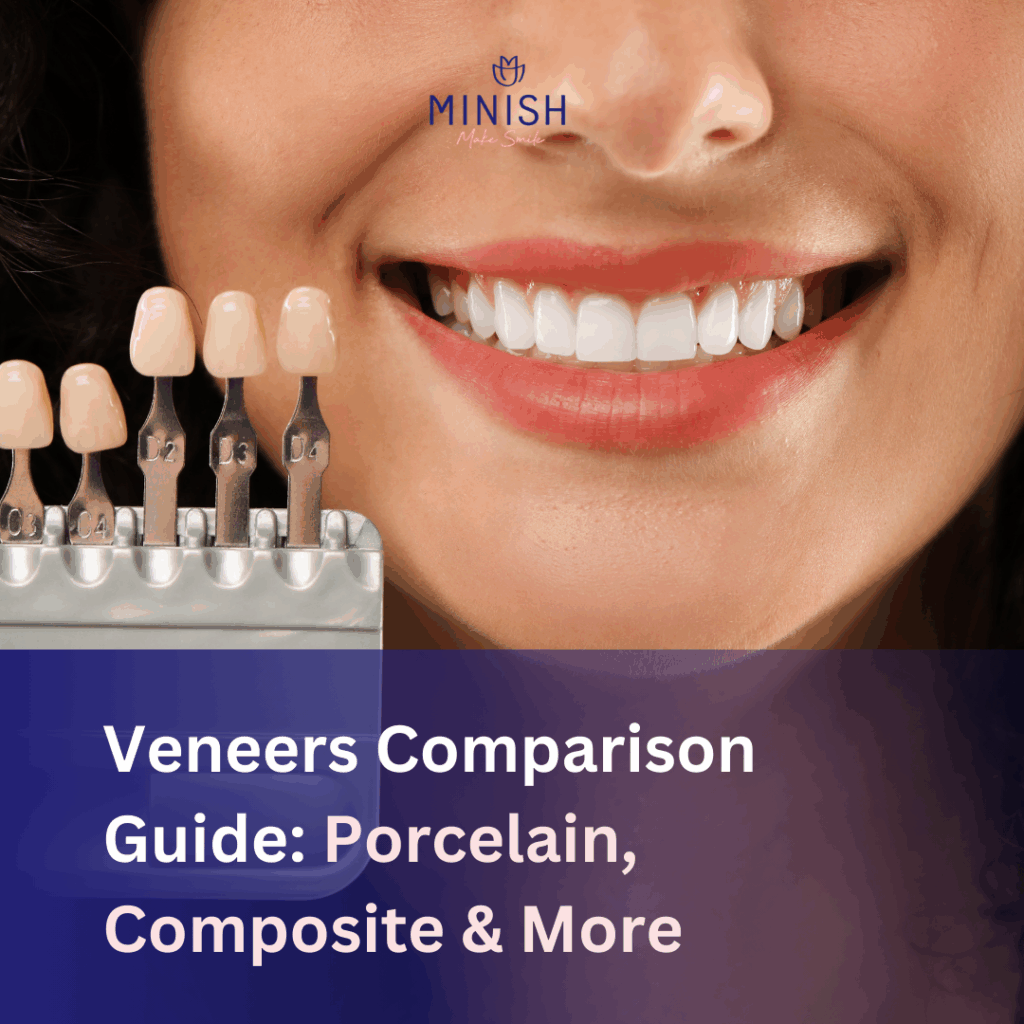
Veneers Comparison Guide: Porcelain, Composite & More
A New Era of Veneers
For decades, cosmetic dentistry has relied on traditional veneers—porcelain, composite, feldspathic, and later zirconia and eMax—to deliver smile transformations. These materials have long been used to restore the appearance of damaged, discolored, or misshapen teeth.
Each material brought its own strengths, whether it was lifelike aesthetics, affordability, or unmatched durability. Yet all of them required compromise. Some demanded significant enamel removal, others sacrificed natural translucency for strength, and many fell short when it came to long-term preservation of tooth health.
Modern dentistry is undergoing a significant transformation. MINISH Veneers, developed in Korea with a biomimetic philosophy, are redefining modern smile design. By prioritizing natural tooth preservation and creating an enamel-like bond that allows veneers to function in harmony with real teeth, MINISH Veneers represent a new category in cosmetic dentistry—one that bridges the gap between aesthetics, function, and long-term oral health.
Why Compare Veneer Types?
Selecting the appropriate veneer type involves far more than simply choosing a shade of white. The right choice depends on balancing durability, invasiveness, aesthetics, and veneer cost. Traditional porcelain veneers may still be the “standard,” but innovations like zirconia and eMax offer new levels of strength, while Lumineers cater to patients seeking a fast, no-prep solution. Meanwhile, MINISH Veneers offer a different kind of value: a minimally invasive, enamel-preserving approach designed for lasting beauty.
This Veneer Comparison Guide: Porcelain, Composite & More compares the most popular veneer types to help patients understand their options and equip/offer providers a comprehensive resource for treatment planning.
Porcelain Veneers
Porcelain veneers remain one of the most widely recognized dental treatments. They are highly aesthetic, stain-resistant, and can last over a decade with proper care. However, they typically require moderate tooth structure reduction to create space for the veneer. That loss of enamel is permanent, and while the results are beautiful, the trade-off is a more invasive treatment approach that doesn’t always preserve natural teeth.
Deep Dive: See how traditional methods compare to the latest technology in our guide: MINISH Veneers vs Traditional Porcelain Veneers
Composite Veneers
Dentists sculpt composite veneers directly onto the teeth using resin, often completing the procedure in a single day. Their biggest advantages are affordability and convenience. However, composites stain more easily, chip faster, and generally last only five to seven years. They are a short-term solution for patients prioritizing cost, but they rarely match the polish or longevity of porcelain or state-of-the-art dental solutions.
Zirconia Veneers
Zirconia veneers are unmatched in strength and fracture resistance, making them ideal for patients with strong bites or bruxism. They are long-lasting and less likely to chip than porcelain. On the downside, zirconia lacks the translucency of enamel, which can result in a less natural appearance unless expertly fabricated. Dentists often place these veneers on back teeth, prioritizing durability over subtlety.
Learn More: Read our full breakdown on What are Zirconia Crowns and Veneers? to see if this material is right for your restoration.
Feldspathic Veneers
Feldspathic veneers are crafted by layering porcelain by hand, allowing for incredible customization of shade, translucency, and texture. Their aesthetic potential is unrivaled, producing lifelike results. However, they are fragile compared to other materials and best suited for low-stress areas or patients with ideal oral health.
Lithium Disilicate Ceramic Veneers
Crafted from lithium disilicate ceramic, these veneers provide an excellent balance of strength and translucency. They are typically stronger than feldspathic porcelain while still offering highly natural aesthetics, making them suitable for both anterior and posterior teeth. The trade-off: placement typically requires moderate enamel reduction and may cause wear on opposing teeth, which may not be ideal for patients seeking ultra-conservative preparation or maximum enamel preservation.
Comparison: For a technical look at these two materials, visit our guide on Feldspathic vs. eMax Veneers
MINISH Veneers: The Next-Generation Alternative
What sets MINISH Veneers apart is their biomimetic strength and minimal tooth reduction. With a thickness of only 0.3–0.5 mm, these veneers preserve the patient’s natural teeth and most of their enamel.
Instead of relying on aggressive preparation, they chemically bond with teeth, allowing them to bend, wear, and age like natural teeth. This integration not only improves long-term function but also reduces the risk of detachment.
Other key advantages include
- Delivered in state-of-the-art dental clinic settings for patient satisfaction and efficient one-day treatment.
- Natural translucency and lifelike aesthetics engineered in the precision MINISH Lab.
- Strength similar to enamel, avoiding excessive wear on opposing teeth.
- Suitability for both cosmetic cases and full-mouth restorative work, including dental crowns and molars.
For patients, this means a healthier, longer-lasting solution. For providers, it represents the future of cosmetic dentistry: one that combines artistry with science and beauty with biology.
Conservative Options: Compare these ultra-thin solutions in our article on [Lumineers vs. MINISH Veneers] or learn more about the broader category of [No-Prep Veneers].
Comparing Veneers at a Glance
- Porcelain: Beautiful and durable, but technique-sensitive and invasive.
- Composite: Provides a rapid and cost-effective solution, though with limited longevity
- Zirconia: Strong, fracture-resistant, but less translucent.
- Feldspathic: Aesthetic excellence, durable, but technique sensitive.
- eMax: Strong and aesthetic, but requires enamel removal.
- Lumineers: No-prep, convenient, but limited in customization.
- MINISH: Biomimetic, minimally invasive, durable, and preserves natural teeth.
A Shift Toward Preservation
The history of dental veneers shows a steady progression from artistry and strength toward more durable, natural-looking solutions. MINISH Veneers marks the next step: conservative, biomimetic, and designed for long-term function as well as beauty.
For patients, they offer the chance to achieve a dream smile without compromising enamel. For dental professionals, they represent an opportunity to join a global movement focused on minimally invasive procedures, advanced dental care, and precision-engineered outcomes.
Dentists today have more veneer options than ever, but not all solutions are equal. By offering MINISH Veneers, providers can introduce patients to a new standard of smile design: minimally invasive, naturally aesthetic, and clinically reliable. Join our provider program and training courses here.
Check Out Our Other Blog Posts!
Looking for more insights on cutting-edge dental technology, minimally invasive treatments, and tips for preserving natural tooth structure? Explore our latest blog posts—from expert advice by Dr. Kang to real success stories and insights from MINISH Dental Hospital.
Whether you’re a dental professional or a curious patient, you’ll find valuable info on everything from tooth integrity, oral health, and innovative dental solutions to the science behind MINISH Veneers.
👉 Stay informed. Stay inspired.